

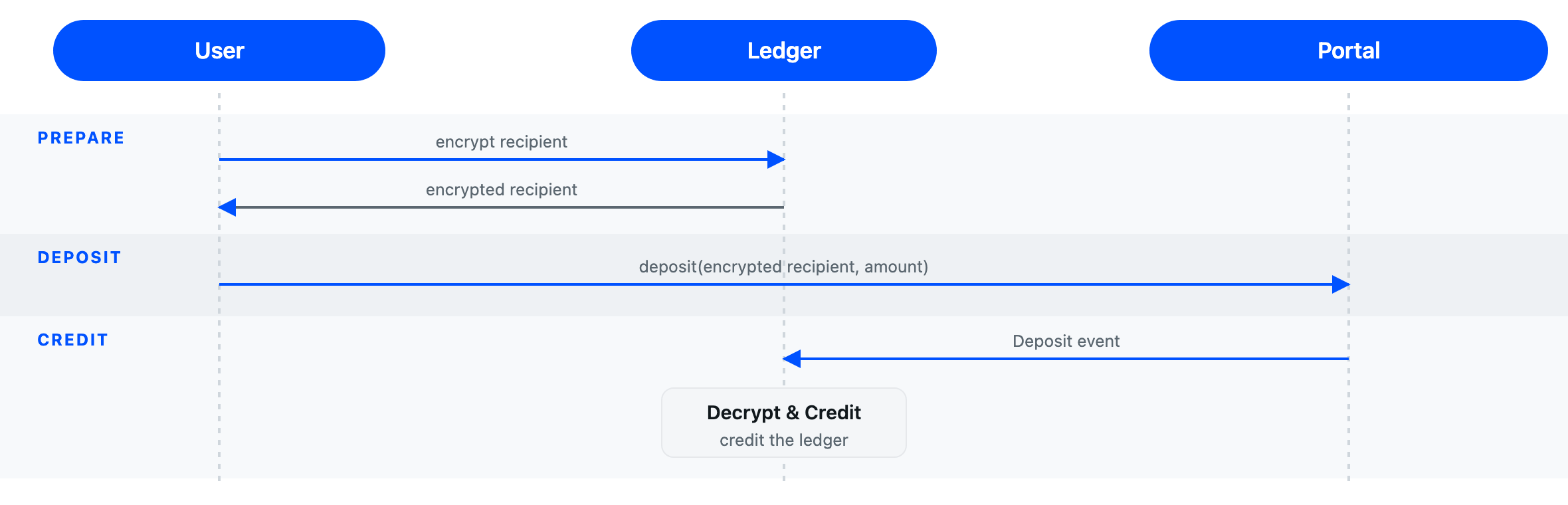
How a deposit works
- Prepare. The recipient is encrypted to prevent onchain observers from knowing who the funds are flowing to.
- Deposit. The sender calls
deposit()on the Portal contract with the encrypted recipient. - Credit. The ledger consumes the event, decrypts the recipient, and credits the recipient in the ledger.
What is exposed
| Data | Public? | Why |
|---|---|---|
| Asset | Public | The Portal settles the transfer on Base. |
| Amount | Public | The Portal settles the transfer on Base. |
| Sender | Public | The address that submits the deposit. |
| Recipient | Hidden | Encrypted so deposits to one account cannot be linked or attributed. |
deposit() call and a Deposit event with an encrypted recipient. Neither links to the recipient.